
Vinegar Pie Assumptions

“Life is like pie. You never know what you’re going to get.” — Anon
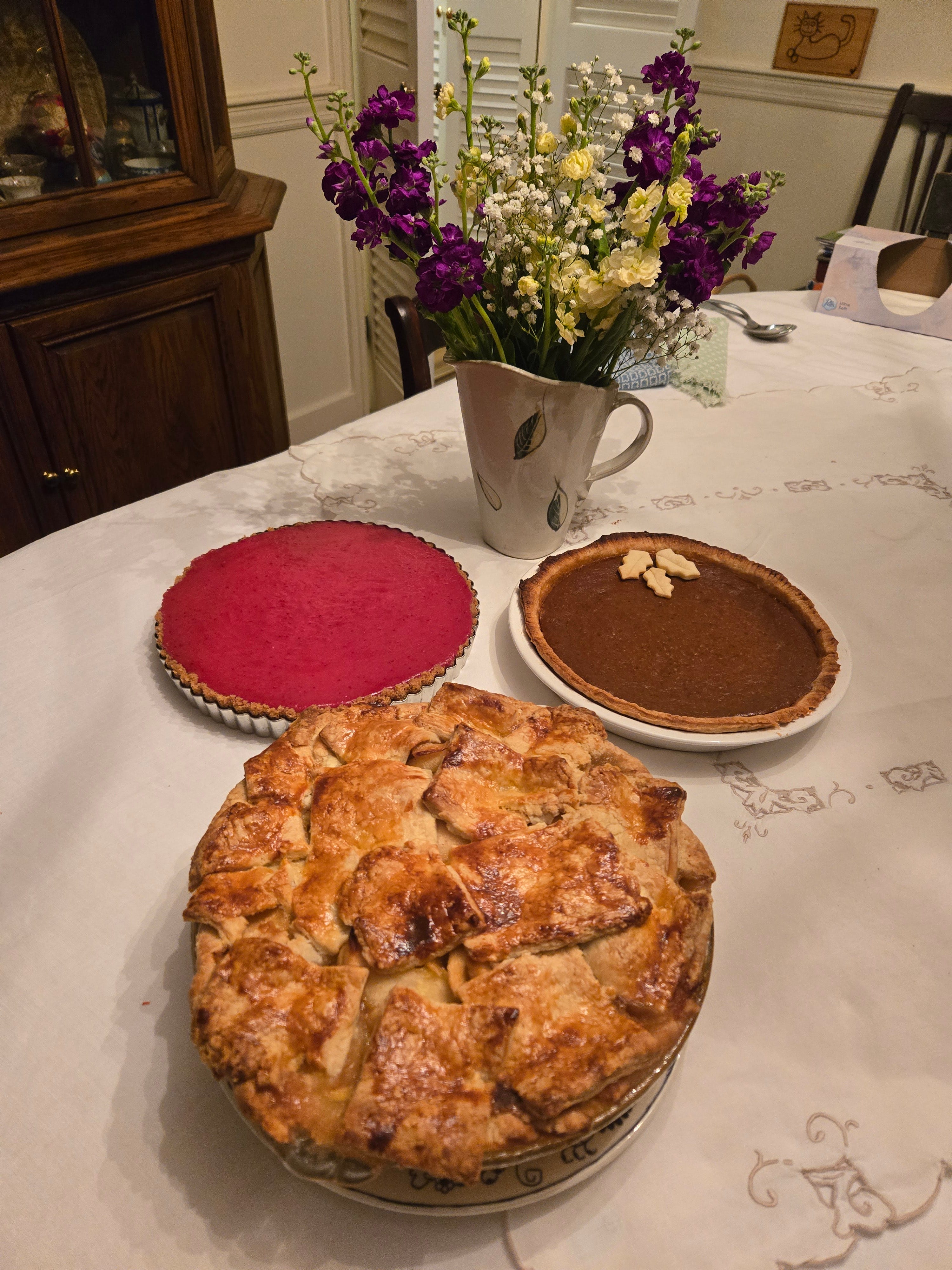
When I was a little girl, my grandparents came over for dinner on many a Saturday night. They nearly always brought a Table Talk pie with them. Table Talk was, and is (I know, because I googled it), located in Worcester, Massachusetts. They were founded in 1924 by Theodore Tonna and Angelo Cotsidas, two immigrants from Greece. (I know because I googled it.) Table Talk has “operated as a family-owned business that specializes in fresh baked pies that are sold in all 50 states, Puerto Rico, Mexico, Canada and beyond.” (I know because I googled it.) Home - Table Talk Pies
That said, I haven’t seen a Table Talk pie in years. That fixture of my early childhood has vanished from my view. That’s because I generally make my own pies now.
Back in the day, though, I particularly looked forward to the Table Talk lemon meringue pie. I remember marveling at the height of the meringue that set off my slice of pie, but, in truth, the taste I loved best was the lemon. My mother told me (and this seems right in character, even now) that when I was really little, I would sit in my highchair chanting, “piece of pie, piece of pie” when it was dessert time.
So, given my love of lemon pie, you might not be too surprised that I was intrigued when I stumbled across a recipe for vinegar pie a bunch of years ago. Chances are you have never had vinegar pie. There’s even a good chance you’ve never even heard of it before. I mean, really, who would make such a thing?
I’m a pretty good cook, even though I get bogged down with the unrelenting need to put meals on the table. Figuring out what to cook is the hardest thing for me, and a lot of that has to do with how easily I get bored with my standard repertoire. If my gang could deal with eating just one meal a week, that might be about the right amount of cooking for me.
A sense of curiosity and intrigue (and even humor!) can spur me on, though. When the New York Times published a recipe for Roasted Chicken Thighs with Tangy Apricots and Carrots, for example, I simply had to try it because the recipe instructed cooks to marinate the chicken in a mixture of apricot preserves, mayonnaise, fresh lemon juice, fish sauce, chili powder, salt, pepper, and dried apricots. I read that and said, “You have to be kidding,” which kind of meant I had to try the recipe. It was delicious! Who would have thunk it?
My cooking prowess is especially reliable in two areas: homemade soups and baked goods. One of the reasons I love winter so much is that it is soup-making season. We eat a lot of soup in our family. It’s good the first night. After that, people covet the leftovers, because soup almost always improves with age. And I almost always improve with soup. Win-win. As for baked goods, I try to forget that I like to make them (and eat them!), because I have one of those waistlines that doesn’t welcome extra calories.
But then there is pie. Thanksgiving pie, especially. Years ago, when I discovered the recipe for vinegar pie, I made it for a Thanksgiving dinner. There were going to be roughly a million people there and plenty of pies, so I figured that, even if the vinegar pie were a flop, it really wouldn’t matter — there would still be plenty of sweets to go around.
The recipe was in one of those cookbooks nonprofit organizations compile for fundraisers. The pie baker submitted her vinegar pie recipe with this note:
This pie is spectacularly good, though the name makes it sound putrid. If you think of the vinegar as a lemon substitute, you understand it better. This dish has a proud history in northern New England, where lemons had to be imported from warmer climates and cost more than many people could afford. The pie comes out a darker yellow color than you get with lemons, and a delicious, non-citrousy flavor. It has been the hit of many a Thanksgiving, leftover pie party, and potluck. It is made without a meringue topping.
My curiosity won the day. I carefully followed the directions, which told me to cook and add the following ingredients to a 9-inch pie shell:
½ cup butter				1 teaspoon vanilla extract
1-1/4 cups white sugar		cup vinegar
3 eggs
I assumed “cup vinegar” meant one cup of vinegar.
Wrong.
It turned out that “cup vinegar” was a typo that omitted the actual amount of vinegar needed. To this day, I have no idea how much vinegar that pie baker puts in her pie. I only know it is a lot less than one cup. As we say here in Maine, that vinegar pie was so “taht” as to be inedible.
But, even after that epic baking failure, my curiosity was still piqued. “Can that be the only recipe for vinegar pie?” I asked myself. I consulted my Fannie Farmer Baking Book, and, voila, another recipe! Fannie uses 1/2 cup of vinegar in her pie. Big difference! The note she includes with her recipe says:
“A sassy, inventive pie created long ago to satisfy the craving for something sweet and acid during the harsh, cold months when fresh lemons were often hard to find. Despite the name, most people will think you are serving lemon pie.”
Naturally, I had to try again. To nobody’s surprise, I really liked the resulting pie. It was very much like the lemon pie of my youth. You would think I would make it regularly now, especially seeing as in a nearby town I can purchase interesting vinegars from Fiore Artisan Olive Oils and Vinegars. How about vinegar pie made with Wild Maine Blueberry balsamic, for instance? Or Blackberry Ginger balsamic? Or Amarena Cherry balsamic? I would be game for trying any of those. But, sadly, vinegar pie has become somewhat of a joke in our family. I offer to make one every Thanksgiving. I get turned down every time. I could still make the pie, of course. But why make it if no one will eat it?
Thanksgiving having just passed, I have been ruminating about vinegar pie again — about my first humorous adventure in making it. And, even though it has become a joke in my family, I always enjoy a chance to chuckle.
But my vinegar pie saga has me thinking a lot about the assumptions people make. There are a lot of assumptions right here in this blog. My assumption that you never have had or never have heard of vinegar pie. My assumption that “cup of vinegar” meant “one cup of vinegar.” My assumption that vinegar pie was so unusual that the only recipe I would find for it would be in that one cookbook — that is to say, initially I never consulted a second cookbook for an alternative recipe. There’s even my assumption that Table Talk pies don’t exist anymore — an assumption I was able to sweep away with a couple of clicks of the mouse. And what about my assumption that a mixture of apricot preserves, mayonnaise, fresh lemon juice, fish sauce, chili powder, salt, pepper, and dried apricots would be a terrible marinade for chicken — an assumption I had to prove wrong for myself?
All of those assumptions are pretty harmless, but lots of other assumptions are corrosive. What about the President’s assumption that the action of one lone gunman — an immigrant from Afghanistan, who shot two members of the National Guard on Thanksgiving Eve — was representative of all immigrants and should lead to permanently ending immigration from Third World countries, for example? What about the Supreme Court’s recent decision to allow federal agents to use racial and ethnic profiling (something totally based on assumptions) to question people about their immigration status? What about the assumption that a “peace” plan crafted solely by Russians and Americans would serve Ukraine well? What about so, so many hurtful assumptions people make based on characteristics like gender, ethnicity, economic status, first language, age, ability, race, sexual orientation, and more? Those kinds of assumptions are all terribly harmful.
It seems to me it’s pretty hard to escape making assumptions. One way human beings make sense of their world is by detecting patterns. The business of detecting patterns begins the instant we are born. We cry, for example, and (if we are a fortunate baby) someone comforts us, feeds us, changes our soiled clothing, makes sure we are warm or cool enough, and so on. If we are consistently cared for, we begin to make assumptions about how to get our needs met. That kind of pattern detection helps us to live and thrive. So, I don’t fault anyone for making assumptions based on the patterns they have witnessed and experienced. But I do advocate for testing our assumptions and for developing enough self-awareness to notice them in the first place. Wouldn’t the world be a whole lot better if everyone did that?
Here’s a tiny assumption I’ve always had but never realized until yesterday: Whereas cakes may be frosted, pies never are. Wrong. Yesterday my neighbor told me about lemon chocolate pie — something I had never heard of before. Nestled inside a pie crust is a lemon curd (so I would like it — another assumption), which has a layer of chocolate frosting on top of it. It’s apparently a specialty of New Haven, Connecticut, courtesy of the Italian community there. Never in New Haven? You can have your lemon chocolate pie shipped to you. I know because I googled it: Chocolate Lemon Pie | Petonito’s Pastry and Cupcake Shoppe
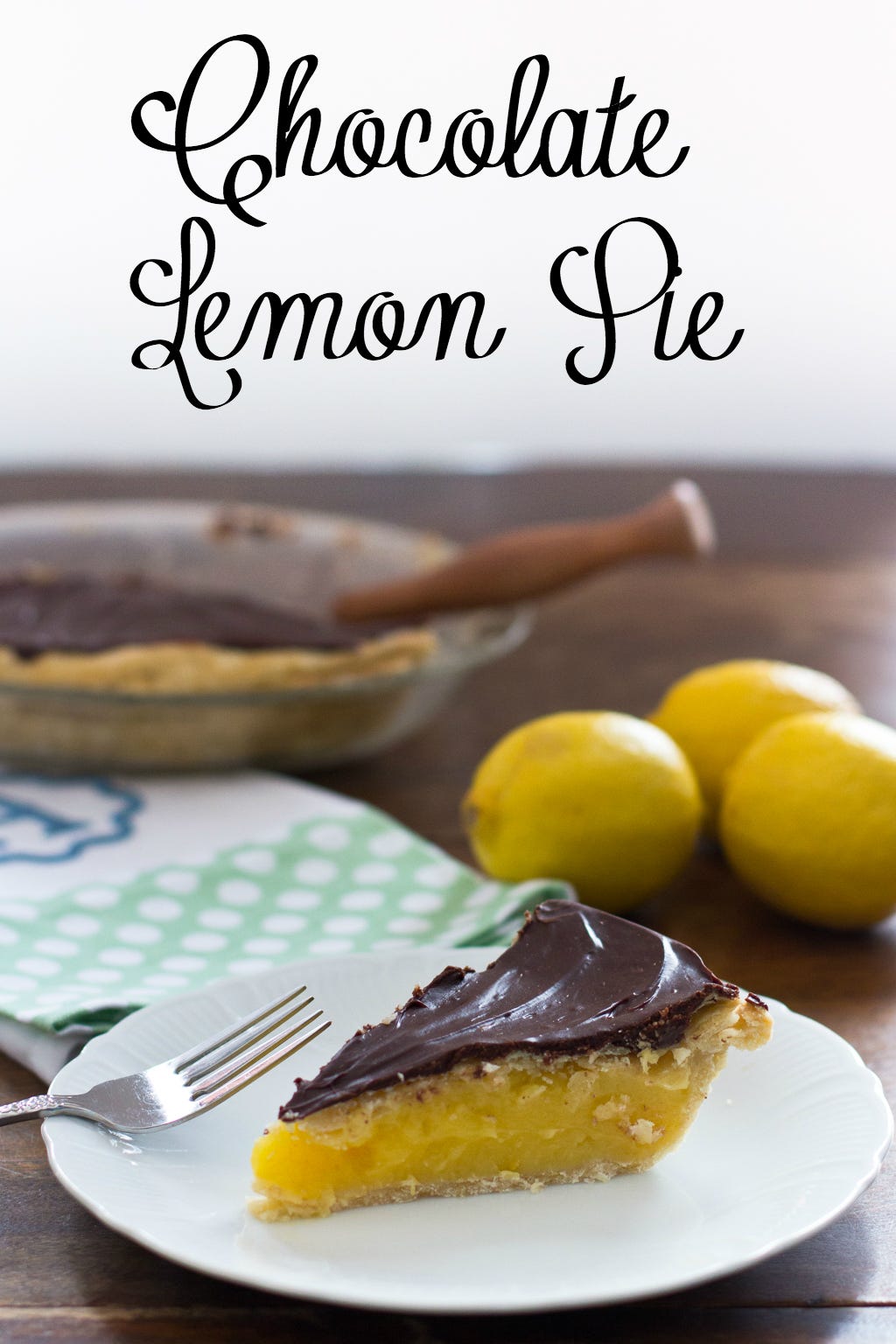
Who knew? I certainly didn’t.
Chocolate Lemon Pie isn’t vinegar pie, for sure. But I can conceive of an occasion where I might have to try it sometime . . .
Here’s to opening minds and hearts!
Love,
Sylvia
As with most everything these days, just Google, as I did, Chocolate Lemon Pie and you will find a recipe. There are also a variety of vinegar pie recipes on Google. My old cookbooks, of which I have many, mostly only get used these days for favorite recipes, as it is far easier to Google than search through them!
I LOVE vinegar pie! And, yes, we made it from my mom's Fannie Farmer cookbook (a copy of which I have in French and it's in there too). I actually don't particularly like any lemon pies, but the vinegar does something different to my tastebuds. Now that you've told me it's supposed to be like lemons, I may have to rethink my appreciation for it and for lemon pies in general.